Understanding Spring Balancers: Efficiency and Ergonomics in Industrial Workspaces
In modern industrial settings, efficiency, safety, and ergonomics are crucial for sustaining productivity. Among the tools that enhance both worker comfort and operational effectiveness, spring balancers play a significant role. These devices are designed to support the weight of tools, allowing operators to work with less fatigue while maintaining precise control. In industries where heavy or repetitive tooling is required, spring balancers are considered essential equipment.
What Are Spring Balancers?
A spring balancer is a mechanical device that suspends a tool in mid-air and offsets its weight using a calibrated spring mechanism. By balancing the tool’s weight, the operator can move it effortlessly within a designated range of motion. Unlike simple suspensions, spring balancers allow controlled vertical movement, providing both stability and flexibility.
Spring balancers are widely used in assembly lines, workshops, and manufacturing facilities where hand tools, pneumatic equipment, or electric devices are used continuously. They reduce strain on the operator and minimize the risk of injuries related to repetitive motion or prolonged lifting of heavy tools.
How Spring Balancers Work
The functioning of a spring balancer is based on a tensioned spring system. The tool is attached to a cable or wire rope connected to the spring inside the balancer housing. When the operator lifts the tool, the spring stretches and provides counterbalance, effectively reducing the perceived weight. When the tool is lowered, the spring retracts, keeping the tool suspended and ready for the next operation.
Modern spring balancers allow adjustment of the load range, enabling them to support various tool weights. This adjustability ensures that each tool is balanced precisely, improving handling and operational efficiency.
Advantages of Using Spring Balancers
1. Reduced Operator Fatigue
Handling heavy or awkward tools for extended periods can cause fatigue, reducing productivity and creating safety hazards. Spring balancers effectively neutralize the tool’s weight, allowing smooth movement and minimizing muscle strain.
2. Enhanced Precision and Control
A balanced tool allows operators to perform tasks with greater accuracy. This is especially important in assembly work, welding, or repetitive manufacturing processes where precision impacts product quality.
3. Improved Workplace Safety
By suspending tools and controlling their movement, spring balancers minimize the risk of dropping heavy equipment, reducing potential workplace accidents.
4. Optimized Workflow
Spring balancers keep tools in a ready-to-use position. Operators spend less time lifting, lowering, or repositioning tools, improving overall workflow efficiency.
5. Versatility Across Industries
Spring balancers are suitable for automotive, aerospace, electronics, metalworking, packaging, and other industrial applications. Their ability to handle different tool types makes them highly adaptable.
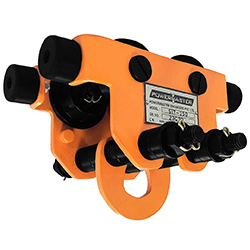 Spring Balancers vs. Load Balancers vs. Tool Balancers
Although these terms are sometimes used interchangeably, there are distinctions:
- Spring Balancers: Use a spring mechanism to counteract tool weight, allowing controlled vertical suspension. Ideal for moderate-weight tools and repetitive operations.
- Load Balancers: Focus on distributing heavier weights across a support structure. Often used for lifting larger components in industrial environments.
- Tool Balancers: A broader category that includes spring and pneumatic balancers, designed to support hand tools based on weight, type, and workspace needs.
Understanding these differences helps companies select equipment that maximizes both safety and operational efficiency.
Applications of Spring Balancers
Spring balancers are employed in various sectors:
- Automotive Manufacturing: Supporting pneumatic wrenches, screwdrivers, and welding tools on assembly lines.
- Electronics Assembly: Suspending lightweight precision tools to improve accuracy.
- Metalworking and Fabrication: Assisting operators with drills, grinders, and heavy hand tools.
- Packaging and Logistics: Facilitating sealing, labeling, and packaging tools.
- Aerospace: Supporting maintenance and assembly of aircraft components.
In each sector, spring balancers contribute to efficiency, reduce fatigue, and improve overall safety.
Selecting the Right Spring Balancer
When choosing a spring balancer, consider:
- Load Capacity: Ensure the balancer matches the weight range of tools. Overloading can cause malfunction.
- Stroke Length: The vertical travel must accommodate the operator’s working range.
- Material and Durability: Industrial-grade metals and corrosion-resistant coatings extend lifespan.
- Mounting Options: Ceiling, wall, or overhead rail configurations must suit the workspace.
- Adjustability: Adjustable tension provides precise control for different tools.
- Proper selection ensures optimal ergonomics, safety, and efficiency.
Maintenance and Safety Tips
Regular inspection is crucial for safe and reliable operation:
- Check cables or wire ropes for fraying.
- Inspect spring mechanisms for tension loss or wear.
- Ensure mounting points are secure and corrosion-free.
- Follow load limits and adjustment instructions provided by the manufacturer.
Consistent maintenance prevents accidents and prolongs equipment life.
POWERMASTER Pvt Ltd: Reliable Industrial Solutions
For industrial operations requiring durable and precise equipment, POWERMASTER Pvt Ltd. offers a comprehensive range of spring balancers, load balancers, and tool balancers. Designed for strength, accuracy, and operator comfort, their solutions are engineered to meet the demands of modern industrial environments. With adjustable load settings, robust construction, and versatile applications, POWERMASTER Pvt Ltd. ensures that tools are easy to handle, safe to use, and ergonomically balanced for operators across diverse industries.