Flange spreaders serve as essential equipment which maintenance workers use across three industrial sectors: gas, petrochemical, and manufacturing. The workers operate them as a tool for separating bolted joints which have become stuck to reduce repair duration and to protect worker safety. With gear wearing out faster under constant pressure, picking the best one matters more than ever. Standards change, so tools need to match up. This blog breaks down the must-haves, based on what's new in the field right now. Teams that upgrade existing models for smarter ones often see faster jobs and fewer headaches.
Know the Basics of Flange Spreaders
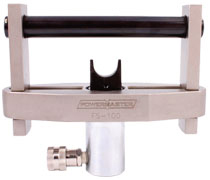
Quality Flange Spreaders stand out by how they handle real-world grime and grip. The hydraulic flange spreader system uses its hydraulic pump to extend narrow pipe flanges through controlled pushing force. You should select equipment that has been certified to meet ASME and ISO standards which now mandate improved leak-proof sealing capabilities. The current industry reports show that companies are adopting lightweight composite materials which enable tools to achieve a 30% weight reduction while maintaining their original strength capacity.
Load Capacity and Force Output
The core strength of any flange spreader depends on its load handling capacity. Start by evaluating the maximum spreading force, which is measured in tons. Entry-level models offer 5-10 tons, where industrial-level reach 50 tons or more for large pipeline flanges.
- Versatile Range: Choose adjustable settings to match job sizes.
- Hydraulic Efficiency: In a hydraulic flange spreader, check pump speed and pressure ratings.
- Overload Protection: Auto-shutoff valves with screen readouts catch issues early, an improvement from last year's models.
Higher capacity means you need fewer tool upgradations, but match it to yoru typical flange diameters to avoid overkill
 Safety Mechanisms and Ergonomics
High-pressure operations require the utmost safety, especially with OSHA's recent guidelines on minimizing pinch points and hydraulic leaks of tools.
Grip and Stability: Wedge-style flange spreaders use serrated jaws, which provide a stronger clamping force than flat blades and reduce the risk of slippage.
Remote Operation: Hydraulic flange spreader kit features wireless control, allowing operators to maintain a safe distance, and is designed to meet 2026 standards.
Ergonomic Handles: Its lightweight aluminum build and non-slip handle make it easy to operate and reduce fatigue from prolonged use.
Include a Flange Alignment Tool for the cleanup, it prevents bolt stress and leaks.
Durability and Material Quality
A tool provides long-term value when it sustains harsh conditions. Corrosion-resistant coatings are now standard.
- Sealed Components: The system uses O-ring seals to protect its components from dust and moisture which results in a 40% increase in operating time according to manufacturer testing.
- Modular Design: The system requires blade and ram replacements to complete its repair process because these components are designed to be easily removed.
- Temperature Tolerance: The equipment can operate in temperatures ranging from -20°C to 150°C which allows it to function in both refinery and cryogenic plant environments.
Simple Setup and Maintenance
The system requires user-friendly setups that can provide time savings on job sites.
- Quick-Connect Fittings: Standardized couplers enable quick installation of fittings by using common coupling systems.
- Integrated Storage: The molded boxes provide a storage solution that maintains organization for both blades and hoses.
- Diagnostic Indicators: LED lights on pumps signal low fluid or pressure issues
Link it to a Flange Alignment Tool to streamline the workflow.
Fitting All Kinds of Jobs
One tool doesn’t cover every scenario; therefore, prioritize adaptability. Multi-angle blades allow access to offset flanges.
Compact Profiles: Under 10 mm thick, ideal for in-service maintenance.
Accessory Compatibility: Swap for odd shapes like beveled edges, stretching one buy further.
Portability: Rechargeable hydraulic flange spreader weighs under 5 kg.
Recent surveys show that versatile tools reduce project times by 25%.
Cost-Effectiveness and ROI
Balance upfront costs with long-term savings. Premium flange spreaders start at $500 and reduce downtime.
- Energy Efficiency: Low-flow pumps minimize operational costs.
- Savings in Training: Simple interfaces mean less onboarding time for crews.
- Resale Value: A durable model retains 60% of its value after 5 years.
Consider how integrating a flange alignment tool can improve overall efficiency and justify the investment.
Conclusion
The purchasing process requires you to assess flange spreaders based to their force capacity, safety features, and ability to operate under different conditions. The year 2024 introduced hydraulic and material improvements which created tools that operate more reliably and better serve worker needs. The crews that use this method for feature selection face results which include fewer accidents and quicker restoration times. Your assessment should include setup evaluation, operational testing, and supplier assessment for dedicated support. The method established here maintains work efficiency while eliminating unnecessary dangers.
FAQs
What is the difference between manual and hydraulic flange spreaders?
Manual versions use torque wrenches for lighter tasks, and hydraulic flange spreader models use pumps for precise, high-force separations in heavy industry.
How often should I maintain a flange spreader?
Inspect seals and hydraulics monthly, flush systems quarterly, and replace fluids annually to ensure optimal performance and safety.
Can flange spreaders damage flange surfaces?
Quality units with protective pads minimize gouging; always use the correct blade size to avoid scoring on soft materials like carbon steel.
Are there portable options for field use?
Yes, battery-operated hydraulic flange spreader kits offer cordless portability, weighing less than 6 kg for easy transport to remote sites.
How does a flange alignment tool complement a spreader?
A Flange Alignment Tool ensures even bolt tightening after separation, reducing the risk of misalignment and extending joint lifespan.