How to Choose the Right Hydraulic Torque Wrenches for Your Project
The process of arranging proper tools for carrying out an intense industrial project may seem like solving a big puzzle, particularly when dealing with securing strong structural joints. Working in the field involving pipelines, power plants, or large machines, you already understand how dangerous it is to fasten heavy bolts manually or using only standard impact guns. Just one faulty joint may lead to serious leakage, damage of gaskets and failure of machines.
To get the right amount of clamping force that your engineering specifications require without much effort on your part, you have to count on the accuracy of the hydraulic torque wrench. It makes use of fluid pressure to generate great force, which can easily handle tough bolts on the construction site.
Square Drive vs Low Profile: Choosing Your Style
Hydraulic wrenches generally fall into two categories. Selecting the right body style is your very first step:
Square Drive Hydraulic Wrenches
These work just like a regular socket wrench but are powered by hydraulics. You snap a heavy-duty industrial socket onto the square drive end, place it over the nut, and start the pump. They are incredibly versatile because a single tool can turn many different nut sizes simply by swapping out cheap impact sockets. If you have plenty of physical clearance around your bolts, this is your best option.
Low Profile Cassette Wrenches
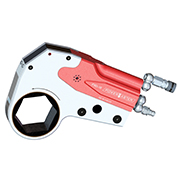 When space is tight, standard sockets will not fit. Pipe flanges, narrow valve housings, and structural steel connections often leave you with only a few inches of clearance. Low-profile wrenches feature a flat, slim cylinder design that connects directly to a hex-shaped cassette link. The tool slips directly over the nut sideways. This allows you to work in tight spaces where other heavy tools fail.
Crucial Factors for Making Your Choice
Once you know the tool shape you need for your hydraulic torque wrenches, write down these field details before placing an order or finalizing a contract:
1. Calculate Your Exact Torque Needs
Never guess how much force you need. Check your engineering documents for the specific target torque value required for your joint. Always select a tool where your target force sits comfortably in the middle of the tool operating range. Running a hydraulic wrench at its absolute maximum capacity all day long overheats the oil and wears out the internal seals quickly.
2. Verify Your Nut Sizes and Clearance
Measure the actual size of your nuts across the flat sides, not just the thread diameter. For square drive setups, ensure you have enough vertical clearance for both the tool body and the socket length. For low-profile tools, measure the exact distance between neighboring bolts to ensure the cassette link fits smoothly without hitting the wall next to it.
3. Check the On-Site Power Options
Your hydraulic tool needs a dedicated pump to supply high-pressure oil through heavy-duty hoses. You need to match your pump engine to the available utility sources on your jobsite. If you work inside a factory with plenty of electrical outlets, an electric pump is clean and quiet. If you work outdoors on pipelines or structural towers, a pneumatic pump driven by an air compressor is much more practical.
4. Buying vs Choosing a Tool Rental
If your crew handles heavy bolting maintenance every single week, purchasing your own fleet makes sense. However, if you only manage a brief annual shutdown or a one-time construction project, a hydraulic torque wrench rental is highly efficient. Opting for a temporary supply guarantees you receive freshly calibrated, modern tools without the long-term storage and maintenance responsibilities.
Reliable Hydraulic Tools from POWERMASTER Ltd.
Matching your job to premium equipment ensures field safety and accurate bolting. POWERMASTER Ltd. manufactures heavy-duty industrial tools built to last in demanding environments:
PSD Series Square Drive Hydraulic Wrenches: Made up of high-tensile aluminum-titanium alloy, they have a 360° click on arm and multi-position hose swivel to allow quick positioning.
PXD Series Low Clearance Hydraulic Wrenches: This is the very narrow cassette style wrench and comes with interchangeable direct fit hex links for flanges with limited clearance.
High Pressure Hydraulic Pumps: We supply matching power packs for them with electric and air drive options, providing smooth flow of oil with torque gauge control.
Your Trusted Partner for Industrial Maintenance
At POWERMASTER Ltd , we strive to provide strong engineering design that will make heavy outdoor work easier and safer. With over fifty years of experience in the manufacture of these products, we deliver the dependable bolting tools, tensioning equipment, and hydraulic power packs.
Our tough machines are designed with your efficiency and protection in mind. Whether you are looking to buy a long-term machine fleet or a hydraulic torque wrench rental for your next job site, we have just what you need. Get in touch with us now to talk about your technical needs.
FAQs
What is the main function of hydraulic torque wrenches?
They use high-pressure fluid to apply precise, heavy-duty rotational force to large bolts, ensuring tight, leak-free joints in heavy industrial settings.
When should I use a low-profile hydraulic wrench?
Use a low-profile wrench when working in narrow spaces, around pipe flanges, or near tight obstructions where a standard socket tool cannot fit.
What are the benefits of a hydraulic torque wrench rental?
Renting gives you immediate access to calibrated, top-tier tools for short-term projects, eliminating upfront purchase costs and long-term maintenance storage needs.
How do I choose the correct size hydraulic wrench?
Check your required torque spec and choose a tool where that number falls within thirty to eighty percent of the wrench total power capacity.
Why trust POWERMASTER Ltd. for your bolting projects?
We offer fifty years of manufacturing expertise, delivering durable, precise, and certified bolting equipment engineered to handle the toughest industrial field conditions